Leave Your Message

Why Choose a Slewing Bearing for Your Application?

Choosing a Slewing Bearing often begins with one practical question: how will the machine move under real load?

In cranes, excavators, robotic arms, and solar trackers, this bearing supports axial loads, radial forces, and overturning moments. It also transfers motion through a large-diameter raceway. That scale matters. From field inspections, uneven lubrication and misalignment appear more often than dramatic component failure. A thoughtful selection process therefore starts with operating conditions, not catalogue size.

Engineers should examine static and dynamic loads, rotation speed, duty cycle, mounting stiffness, clearance, sealing, and temperature. Gear teeth, if integrated, require separate attention to torque, backlash, and lubrication. A bearing that fits the drawing may still perform poorly. This is where load calculations, finite element checks, and supplier validation become valuable. Trusted manufacturers typically review load cases, raceway hardness, bolt patterns, and expected service life before production. Quality records and documented testing strengthen confidence, though paperwork cannot replace practical inspection.

The best choice balances capacity, precision, maintenance access, cost, and risk. No universal answer exists. A compact design may reduce weight but leave less margin for shock loads. A larger bearing may improve durability while increasing inertia and installation demands. The calculation may look correct, yet the application can still surprise you. These trade-offs deserve honest review, especially when dust, water, vibration, or interrupted maintenance are expected. This guide explores why a Slewing Bearing may suit an application, how to compare alternatives, and where common assumptions can fail. Real reliability comes from matching evidence with experience. Check the details twice.
Why Choose a Slewing Bearing for Your Application?

What Is a Slewing Bearing and How Does It Work?

Why Choose a Slewing Bearing for Your Application?

What Is a Slewing Bearing and How Does It Work?

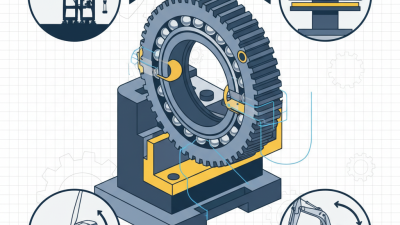
A slewing bearing is a large-diameter bearing designed to rotate heavy equipment around a fixed axis. It usually has an inner ring, an outer ring, rolling elements, raceways, seals, and mounting holes. Some designs include internal or external gear teeth. Balls suit smooth, moderate-load movement, while rollers often handle greater loads and stiffness requirements.

The bearing carries axial loads, radial loads, and overturning moments at the same time. Its rolling elements move between hardened raceways as one ring rotates against the other. Bolts secure the bearing to the machine structure, while lubrication reduces friction and wear. Correct preload or internal clearance matters. Too much pressure can raise heat, while excessive clearance may create vibration and positioning errors.

In practical installations, alignment is often more important than expected. A warped mounting surface can concentrate load on a small raceway area. Field checks should include bolt tightening, gear backlash, lubrication condition, seal damage, and unusual noise. Load calculations must consider static weight, acceleration, wind, shock, and operating frequency. A bearing can look oversized yet still fail under a poorly distributed moment. That is an easy detail to underestimate. Maintenance records also help reveal slow changes, although inspection intervals may need adjustment after real operating data becomes available.

Which Applications Require a Slewing Bearing?

A slewing bearing becomes necessary when a machine must rotate a heavy load around a fixed axis. The load may be an excavator house, crane platform, wind-turbine nacelle, or solar-tracker row. These systems combine radial, axial, and overturning forces in one compact assembly. Plain bearings often need more space, separate supports, or frequent alignment checks. That matters when downtime leaves a crane waiting above a crowded construction site.

Wind energy provides a clear example. The U.S. Department of Energy’s Land-Based Wind Market Report: 2024 Edition recorded 6.2 GW of new U.S. wind capacity in 2023. Its technical descriptions identify yaw systems as essential for nacelle orientation. A slewing bearing supports this turning motion while resisting wind-driven overturning moments. Similar demands appear in cranes, aerial work platforms, drilling equipment, and radar pedestals. The IEA PVPS Trends report states that global photovoltaic capacity passed 1.6 terawatts by the end of 2023. Tracking systems may use slewing drives and bearings to keep panels facing changing sunlight.

Selection
Selection still requires engineering judgment. Speed, duty cycle, contamination, bolt pattern, and lubrication access can change the answer. A lightly loaded inspection platform may not need the largest ring. An outdoor excavator may need seals, hardened raceways, and calculated static safety margins. In practice, I would verify loads from real operating cycles, not catalogue diagrams alone. That step is easy to skip. Measured shock loads can challenge an otherwise correct calculation.

What Benefits Does a Slewing Bearing Provide?

Why Choose a Slewing Bearing for Your Application?

What Benefits Does a Slewing Bearing Provide?

A slewing bearing supports axial loads, radial loads, and overturning moments in one compact assembly. This makes it useful in cranes, excavators, positioning tables, and rotating platforms. Unlike a simple rotary joint, it can manage combined forces while maintaining controlled movement. The result is often a cleaner mechanical layout with fewer separate components.

Space savings matter in real equipment. A properly selected bearing can reduce shaft length, housing size, and assembly complexity. Integrated gear teeth may also support controlled rotation without adding another transmission stage. Operators can achieve smooth positioning at low speeds, even when the load changes during operation. That control improves accuracy and may reduce vibration near the working tool.

Maintenance benefits depend heavily on design details. Accessible lubrication points can simplify service during scheduled inspections. Effective seals help block dust, water, and abrasive particles from reaching the raceway. Installation accuracy remains critical. A rigid mounting surface, correct bolt tightening, and proper clearance all influence service life. Small errors can become expensive.

Bigger is not always better. An oversized bearing may increase weight, friction, and cost without improving performance. Engineers should check static capacity, dynamic loads, tilting moments, speed, temperature, and expected duty cycles. Field conditions deserve honest attention. Frequent shock loads or poor lubrication can shorten life faster than calculations suggest. Selection should combine tested load data with practical maintenance experience.

How to Select the Right Slewing Bearing for Your Application?

Why Choose a Slewing Bearing for Your Application?

How to Select the Right Slewing Bearing for Your Application?

Selecting a slewing bearing starts with the actual load path, not the catalog diameter. Record axial load, radial load, overturning moment, rotation speed, and duty cycle. Include shock loads. A compact bearing may fit the frame but fail under repeated tipping forces. The 2024 Global Wind Report recorded 117 GW of new wind capacity installed in 2023. That growth reflects larger machines and heavier operating demands. It also shows why application data must be measured carefully.

Check the static safety factor against the maximum combined load. Then verify dynamic rating, raceway hardness, bolt capacity, and gear tooth strength. ISO 281 provides a recognized method for rating life calculations, but it does not replace field judgment. For slow, oscillating motion, contamination and lubrication can matter more than calculated fatigue life. Ask whether the bearing will face dust, salt spray, vibration, or temperature swings. The seal is not a minor detail.

Do not select by bore size alone. I have seen projects specify a larger bearing, then discover that the mounting plate twists under load. That mistake is expensive. A finite-element check can reveal uneven bolt reactions before production. Gear backlash, pinion alignment, and mounting flatness also deserve inspection. The best choice balances capacity, stiffness, speed, maintenance access, and available space. Sometimes the technically ideal design is too difficult to service. That deserves honest reconsideration.

What Factors Affect Slewing Bearing Performance and Service Life?

Why Choose a Slewing Bearing for Your Application?

What Factors Affect Slewing Bearing Performance and Service Life?

Slewing bearing performance begins with load analysis, not catalogue selection. Radial load, axial load, tilting moment, speed, and duty cycle interact continuously. A machine lifting a suspended load faces changing forces during acceleration and braking. Mounting stiffness also matters. A flexible structure can distort the raceway and concentrate contact stress. ISO 281:2007 defines L10 rating life at 90% reliability under stated conditions. That figure is useful, but it is not a promise. Real service conditions often differ.

Static loading deserves equal attention. ISO 76:2006 relates static load rating to permanent deformation near 0.0001 of a rolling element’s diameter. Excessive shock can damage the raceway before fatigue becomes visible. In field inspections, uneven tooth wear often points to poor alignment, weak bolts, or insufficient support. Sometimes, the bearing was blamed too quickly. The design assumption was wrong.

Lubrication, contamination, sealing, temperature, and installation quality strongly affect service life. Grease must reach the rolling paths, while excessive quantity can increase heat. Water and abrasive dust create a harsh mixture. ISO 15243:2017 identifies contamination, inadequate lubrication, and mounting damage as recognized failure mechanisms. Monitoring torque, vibration, temperature, and backlash helps detect change early. However, sensors cannot correct poor assembly. Clean handling, controlled bolt tightening, accurate mounting surfaces, and scheduled inspections remain essential. Maintenance records should include load patterns, grease intervals, and operating temperature. Small details accumulate.

Why Choose a Slewing Bearing for Your Application? - What Factors Affect Slewing Bearing Performance and Service Life?

Performance Factor Typical Design or Operating Data Effect on Performance and Service Life Recommended Control Measures
Axial Load Defined by the combined operating weight, working load, acceleration, and external forces. Excessive axial loading can increase rolling-contact stress, raceway deformation, and fatigue risk. Calculate maximum and working loads separately, including shock factors and load combinations.
Radial Load Generated by lateral forces, offset loads, wind, belt tension, or guide reactions. High radial load may produce uneven raceway stress, increased friction, and localized wear. Verify radial load distribution and prevent excessive housing or support-frame deflection.
Overturning Moment Calculated from the applied force multiplied by its distance from the bearing center. A large moment increases load variation between the most heavily and lightly loaded rolling elements. Use the complete load envelope and check the maximum moment during starting, stopping, and emergency conditions.
Operating Speed Slewing bearings commonly operate at low rotational speeds or intermittent oscillation; the allowable speed depends on size, load, lubrication, seal design, and heat dissipation. Higher speed increases frictional heat and lubricant demand and may reduce allowable load capacity. Confirm speed limits using the bearing manufacturer’s load-speed data and monitor temperature during commissioning.
Load Cycle and Oscillation Duty cycle should include direction changes, dwell periods, partial rotations, and frequent starts and stops. Small-amplitude oscillation can repeatedly load the same raceway zones and contribute to false brinelling or fretting wear. Evaluate the complete motion profile rather than relying only on average speed or average load.
Mounting Surface Flatness The support structure must remain within the bearing supplier’s specified flatness and stiffness limits. Uneven mounting can distort the rings, alter internal load distribution, and cause localized raceway stress. Machine or inspect the mounting surfaces and verify flatness before installation.
Mounting Bolt Preload Bolt size, grade, tightening sequence, torque, and preload must match the approved installation specification. Insufficient or uneven preload can cause joint movement, fretting, bolt fatigue, and ring deformation. Use calibrated tools, a cross-pattern tightening sequence, and documented torque or tension verification.
Lubricant Selection Grease selection depends on load, speed, temperature, water exposure, relubrication method, and compatibility with seals. Incorrect viscosity, additives, or grease compatibility can increase wear, heat generation, and corrosion. Follow the specified grease type and avoid mixing products unless compatibility has been confirmed.
Relubrication Interval Intervals vary with duty cycle, speed, temperature, contamination, seal condition, and lubricant type. Under-lubrication promotes metal-to-metal contact, while excessive lubrication can increase churning and temperature. Establish the interval from the application duty and inspection results; replenish through all available grease points when applicable.
Contamination and Water Ingress Dust, abrasive particles, moisture, salt spray, and process chemicals are common environmental hazards. Contaminants can damage raceways, degrade grease, corrode components, and accelerate seal wear. Use suitable seals, shielding, drainage, cleaning procedures, and timely replacement of damaged sealing elements.
Operating Temperature Temperature limits are determined by steel, seals, grease, heat generation, and surrounding equipment. High temperature reduces lubricant life and may damage seals; low temperature can increase starting torque. Select temperature-compatible materials and lubricant, and trend bearing temperature during operation.
Internal Clearance or Preload The required internal condition depends on bearing design, temperature, mounting distortion, load, and accuracy requirements. Excessive clearance can cause impact and vibration; excessive preload can increase friction, heat, and wear. Use the specified bearing configuration and inspect rotational resistance, backlash, or axial movement as required.
Gear and Pinion Alignment For geared slewing bearings, backlash, tooth contact, pinion position, and concentricity must meet the approved design values. Poor alignment can create edge contact, noise, vibration, tooth wear, and drive overload. Check backlash and contact pattern throughout the rotation and adjust the drive mounting when necessary.
Corrosion Protection Protection requirements depend on humidity, salt exposure, chemicals, storage conditions, and coating system. Corrosion pits can act as stress concentrations and may lead to premature raceway or gear failure. Maintain protective coatings, prevent standing water, use suitable corrosion-resistant materials, and inspect exposed surfaces.
Shock and Vibration Impact loads may arise from dropped loads, uneven travel, sudden stops, structural resonance, or tool engagement. Repeated shocks can cause brinelling, raceway indentations, bolt loosening, and accelerated fatigue. Include dynamic and impact factors in the design and eliminate avoidable resonance or abrupt motion.
Inspection and Monitoring Useful indicators include temperature, noise, vibration, torque, backlash, grease condition, and bolt tightness. Trend changes can reveal lubrication problems, contamination, misalignment, raceway damage, or structural looseness. Create baseline measurements after installation and investigate changes before visible damage becomes severe.

Note: Actual load ratings, allowable speeds, mounting tolerances, bolt requirements, clearance values, lubricant specifications, and service intervals must be confirmed for the selected slewing bearing design and application duty.