+86-13349293098


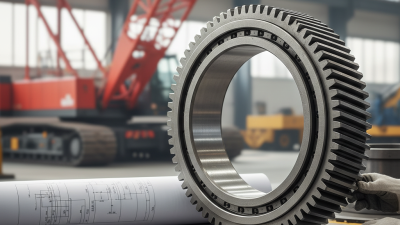
Selecting the right Slewing Circle Bearing manufacturer can influence equipment safety, uptime, and long-term maintenance costs. These components support heavy radial, axial, and moment loads in cranes, excavators, wind turbines, and industrial positioning systems.
This guide examines ten recognized manufacturers serving markets worldwide. It considers engineering experience, production capacity, bearing accuracy, sealing technology, customization, testing, and after-sales support. We also look at practical details, such as raceway hardness, gear quality, bolt-hole patterns, lubrication access, and delivery consistency. Small details matter.
The selection is not based on brand visibility alone. Reliable manufacturers should provide traceable materials, dimensional inspection records, load calculations, and clear technical documentation. Their products should match the machine’s speed, load spectrum, operating environment, and expected service life. A bearing that appears economical may create expensive downtime if its lubrication channels or mounting tolerances are unsuitable.
There is no universal winner. Each manufacturer has different strengths, regional advantages, and application limits. Public information can also be incomplete, and supplier claims deserve careful verification. That is worth remembering. This overview therefore offers a practical comparison rather than an absolute verdict. Readers should confirm specifications directly with manufacturers and qualified engineers before making a purchase. Field experience, transparent testing, and dependable communication often reveal more than a polished catalogue.
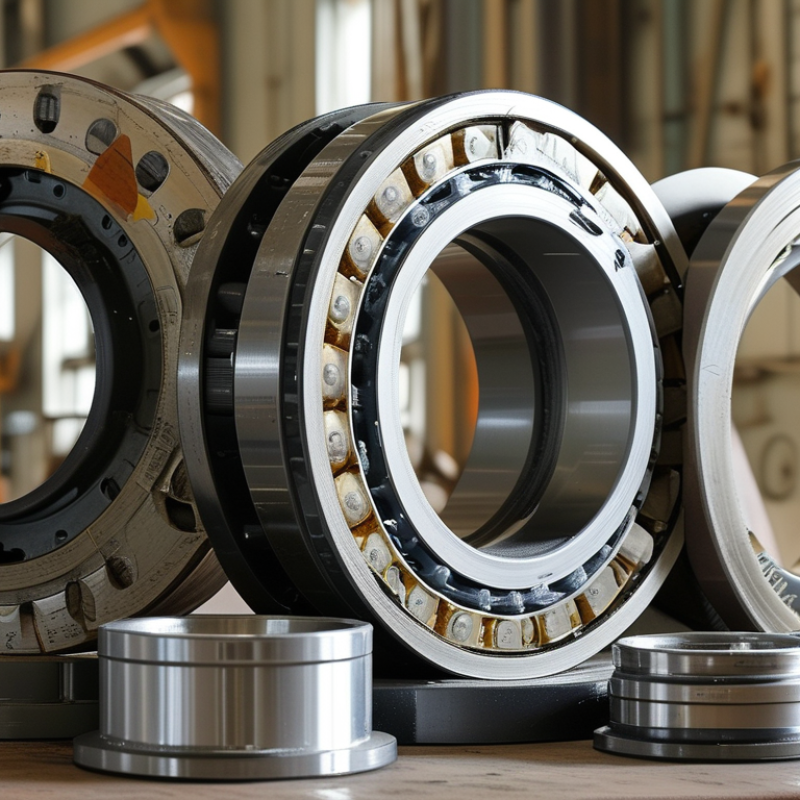
A slewing circle bearing, also called a slewing ring, supports controlled rotation between two large machine structures. It carries axial loads, radial loads, and overturning moments at the same time. Unlike a standard bearing, it often uses a large-diameter raceway with an inner ring, outer ring, rolling elements, seals, and mounting holes. Some designs also include internal or external gear teeth.
The bearing rotates slowly but works under demanding conditions. Excavators, cranes, wind turbines, medical scanners, and positioning platforms commonly use it. The Global Wind Energy Council reported 117 gigawatts of new wind capacity installed worldwide in 2023. That expansion increases demand for reliable yaw and pitch rotation systems. However, the bearing does not carry every load alone. Bolts, housings, lubrication, and foundation stiffness strongly affect performance.
Engineers usually check static capacity, fatigue life, bolt strength, raceway hardness, and gear contact. ISO 76 supports static load-rating calculations, while ISO 281 guides rating-life evaluation for rolling bearings. Field inspections should look for grease leakage, uneven tooth wear, abnormal clearance, and vibration. “Maintenance-free” is often an overstatement. Dust, water, poor bolt tension, or infrequent relubrication can shorten service life quickly. In my view, selection errors happen when buyers compare diameter and price, but ignore moment loads and installation accuracy.
| No. | Technical Dimension | Common Types or Reference Values | Why It Matters |
|---|---|---|---|
| 1 | Definition | A slewing circle bearing is a large-diameter rolling-element bearing designed to support axial load, radial load, and overturning moment while permitting rotational movement. | It combines rotation and structural support in one compact assembly, reducing the need for separate bearing and turntable components. |
| 2 | Rolling-Element Arrangement | Common designs include single-row four-point-contact ball, double-row ball, crossed-roller, and three-row roller configurations. | The arrangement affects load capacity, stiffness, friction, allowable misalignment, and overall section height. |
| 3 | Load Directions | Most slewing bearings are selected for combined axial load, radial load, and overturning moment rather than for a single load direction. | The combined-load relationship determines bearing size, internal geometry, bolt arrangement, and service life. |
| 4 | Gear Configuration | Available configurations include gearless, internal-gear, and external-gear designs. Gear teeth may be straight or manufactured with specified accuracy classes. | The gear arrangement determines drive placement, installation clearance, backlash requirements, and maintenance access. |
| 5 | Raceway and Ring Material | Bearing rings are commonly produced from bearing or alloy steels and may use induction-hardened raceways to improve wear and contact-fatigue resistance. | Material selection and hardening depth influence static capacity, fatigue resistance, impact tolerance, and repairability. |
| 6 | Lubrication | Grease lubrication is widely used; the correct grease grade, relubrication interval, and compatibility depend on load, speed, temperature, sealing, and environment. | Insufficient or incompatible lubrication can accelerate raceway wear, rolling-element damage, and gear failure. |
| 7 | Sealing and Environmental Protection | Integral seals help retain lubricant and limit the entry of water, dust, and abrasive contaminants. Additional covers may be required in severe conditions. | Contamination control is especially important in construction machinery, outdoor equipment, marine systems, and dusty industrial applications. |
| 8 | Mounting and Bolting | The assembly normally uses a circular bolt pattern with specified bolt grade, tightening sequence, pretension, mounting-surface flatness, and concentricity. | Incorrect mounting can cause flange distortion, uneven load distribution, premature raceway damage, and excessive running clearance. |
| 9 | Performance Verification | Selection commonly considers static safety, dynamic rating life, allowable moment, tilting stiffness, rotational resistance, gear capacity, and backlash. | A bearing may have sufficient static capacity but still require a different design because of fatigue life, stiffness, speed, or drive accuracy. |
| 10 | Typical Applications | Common applications include cranes, excavators, aerial work platforms, wind turbines, solar trackers, robotics, radar systems, medical equipment, and industrial indexing tables. | The application determines the required load spectrum, rotation speed, precision, sealing level, temperature range, and maintenance strategy. |
Note: Actual capacity, dimensions, service life, mounting requirements, and operating limits must be confirmed from the selected bearing's technical documentation and application calculations.
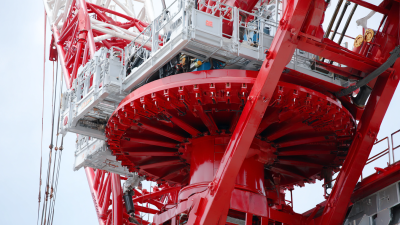
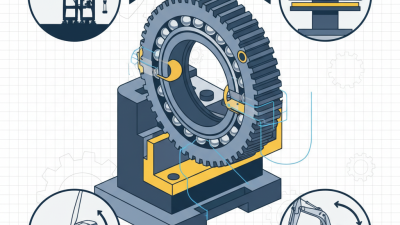
Slewing circle bearings support controlled rotation in cranes, excavators, wind systems, and positioning equipment. Their design usually combines an inner ring, outer ring, rolling elements, spacers, seals, and a gear option. Load paths matter. The bearing must carry axial force, radial force, and overturning moment at the same time.
Engineers classify these bearings by rolling element, raceway arrangement, gear position, and load capacity. Single-row ball designs suit moderate loads and smooth movement. Cross-roller types provide high stiffness and accurate positioning. Three-row roller designs handle heavier loads with strong axial and moment resistance. Internal gears keep the teeth protected, while external gears simplify inspection and replacement.
Design work begins with operating speed, load cycles, mounting stiffness, lubrication, and environmental exposure. A dusty construction site needs stronger sealing than an indoor assembly line. Engineers also check bolt preload, raceway hardness, tooth accuracy, and permissible clearance. Small installation errors can create uneven contact and early wear. Tolerance is unforgiving. A neat classification chart can still mislead when real loads change direction frequently. In practice, measured vibration and temperature often reveal problems that calculations miss. Manufacturer selection should therefore include test data, inspection records, material traceability, and technical support, not only catalog ratings.
Slewing circle bearings are commonly classified by their rolling-element arrangement. The number of rolling-element rows is a direct design feature that affects load distribution, stiffness, friction, and moment-load capacity.
Single-row ball bearings use one raceway set, while double-row ball and three-row roller designs use additional rolling-element rows to distribute higher combined loads. Crossed-roller bearings also use one row, with rollers arranged at alternating right angles to improve moment-load handling and rotational accuracy.
Comparing the top 10 slewing circle bearing manufacturers requires more than checking catalog load ratings. ISO 76 defines static load ratings, while ISO 281 provides the framework for rating life calculations. A credible manufacturer should show both calculations and test conditions. Ask whether ratings include shock, overturning moment, speed, and temperature. Many comparisons fail here.
Material control deserves equal attention. The World Steel Association reported global crude steel production of about 1.89 billion tonnes in 2023. That scale makes traceability essential, not optional. Compare steel certificates, hardness depth, heat-treatment records, and ultrasonic inspection results. Raceway hardness should match the intended load cycle. Gear accuracy, bolt-hole precision, seal design, and corrosion protection also affect real service life. Small deviations can become visible as backlash, noise, or uneven rotation.
Production evidence separates experienced manufacturers from capable-looking suppliers. Request endurance-test data, dimensional inspection reports, batch traceability, and failure-analysis procedures. Check whether the factory measures runout after assembly, not only before it. Delivery capacity matters too; compare documented lead times, spare-part support, and field-service coverage. Cost should be assessed per operating hour, not per unit. A cheaper bearing can become expensive after repeated shutdowns. I would still treat brochures cautiously. Independent verification is better. One overlooked point is installation guidance: even a well-made bearing can fail early when bolt preload, lubrication, or mounting flatness is poorly controlled.
The global slewing bearing market is expanding with construction, wind energy, robotics, and port equipment. Grand View Research reported a market value of about USD 2.5 billion in 2023. Its forecast suggests steady growth through 2030. This demand supports a competitive group of ten leading manufacturers worldwide. However, a ranking should not rely on revenue alone. Product accuracy, fatigue life, sealing quality, and delivery stability matter more in real projects.
Manufacturers serving excavators often produce large-diameter bearings with three-row rollers. Wind turbine applications require controlled friction and strict dimensional tolerances. Load testing should include axial force, radial force, and overturning moment. ISO 9001 certification helps, but it does not prove long-term field performance. That is an uncomfortable point. Buyers should examine inspection records, failure data, and independent test results. The World Wind Energy Association’s recent reports also show continuing turbine installation activity, creating demand for reliable pitch and yaw components.
Tips: Compare the top ten suppliers by application, not popularity. Request torque curves and service-life calculations. Check grease channels, bolt-hole accuracy, and replacement lead times. A lower purchase price may hide higher downtime costs. I would also ask for references from similar machines. One overlooked detail is storage: poor protection can damage raceways before installation. Even expert selections can fail when mounting surfaces are uneven.
Top 10 Slewing Circle Bearing Manufacturers Worldwide: Applications, Quality Standards, and Selection Considerations
Slewing circle bearings support cranes, excavators, wind turbines, solar trackers, and industrial robots. Each application creates different demands. A crane may need high static capacity and strong resistance to overturning moments. A robotic system usually requires low friction, smooth rotation, and accurate positioning. Offshore equipment adds salt spray, vibration, and difficult maintenance access.
A reliable manufacturer should provide traceable material records, dimensional inspection reports, and documented load testing. ISO 9001 certification can indicate controlled production processes, but certification alone proves little. Ask for evidence of raceway hardness, gear accuracy, sealing performance, and bolt-hole tolerances. ISO 76 and ISO 281 calculations can support static and dynamic load evaluation. However, real operating conditions still matter.
Selection should begin with axial load, radial load, tilting moment, rotation speed, and expected service life. Then examine lubrication intervals, installation alignment, sealing design, and operating temperature. Field maintenance records are valuable. They reveal noise, gear wear, grease leakage, and mounting problems that brochures often omit. A cheaper bearing may appear practical. It can become expensive after repeated downtime. Even experienced engineers sometimes underestimate contamination or uneven foundation surfaces. That mistake deserves careful review. Ask each supplier for application references, inspection procedures, replacement guidance, and technical support after delivery.