What Are the Top Types of Dump Bed Cylinders?
Choosing a Dump Bed Cylinder is not just a matter of matching a part to a truck. Cylinder design affects lifting force, bed angle, cycle time, and available space beneath the chassis. A small tipper may use a compact single-stage cylinder, while a longer bed often needs a multi-stage telescopic design to reach its required lift height. The difference is visible during operation: a telescopic cylinder extends in sections, much like nested tubes. Simple, but not effortless.
This guide compares common types, including single-acting and double-acting cylinders, single-stage and multi-stage designs, and front-mounted and underbody arrangements. These categories describe different things: how the cylinder moves, how many stages it has, and where it sits on the vehicle. That distinction matters. A mounting style alone does not confirm that a cylinder can handle the load or fit the frame.
Look beyond the product name. Check rated pressure, bore, stroke, closed length, pin dimensions, and compatibility with the hydraulic system. The bed’s weight distribution and hinge position also affect the required lifting force. A catalog image can be misleading. Real fit depends on measurements and operating conditions, so verify specifications with the vehicle or equipment manufacturer before replacing a cylinder. The best choice is the one that suits the actual bed, not merely the one with the largest capacity listed.
What Is a Dump Bed Cylinder and What Does It Do?
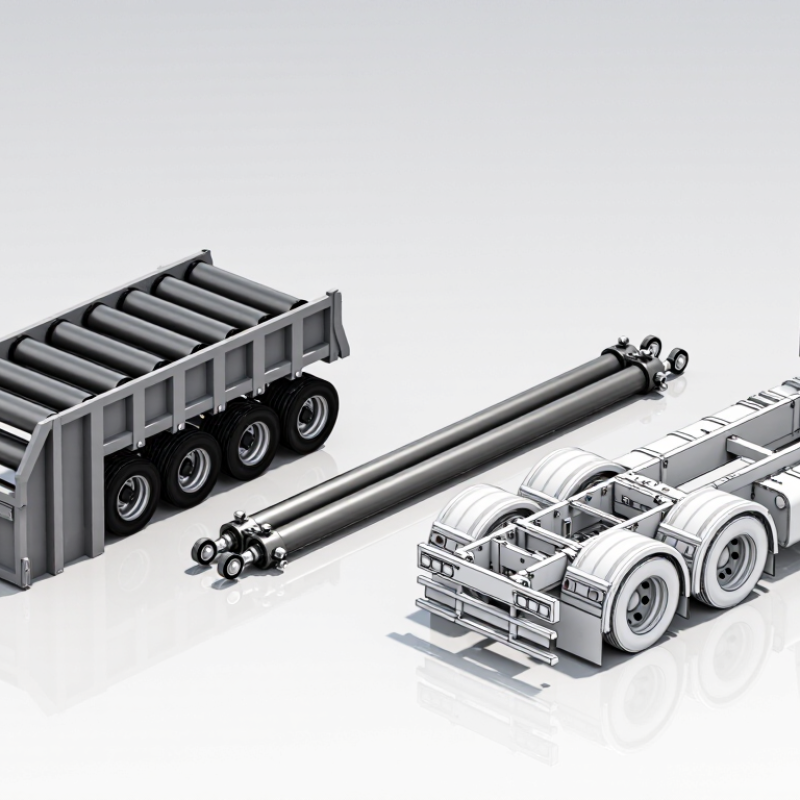
A dump bed cylinder is the hydraulic actuator that raises and lowers a truck’s dump body. It converts oil pressure into straight-line force. As the cylinder extends, it pushes the bed upward, allowing the load to slide out. When it retracts, the bed returns to the frame. Simple in principle.
Many dump beds use telescopic cylinders, which extend in stages to provide a long lift from a compact starting length. Single-stage cylinders are another option, generally suited to applications needing less extension. The right arrangement depends on the bed’s weight, hinge location, lift angle, and available mounting space. A cylinder that looks large enough may still be poorly matched to the load or geometry.
In practice, operators may notice a slow lift, uneven movement, or oil around a fitting before a problem becomes obvious. Those signs deserve attention. Check the cylinder, hoses, pins, and mounts for wear or damage, and follow the equipment maker’s service guidance. A clean cylinder surface helps reveal leaks. Still, appearance alone cannot confirm its condition; internal wear can be less visible. There is no single cylinder type that fits every dump bed, and choosing one by size alone is an easy mistake.
What Are the Top Types of Dump Bed Cylinders? - What Is a Dump Bed Cylinder and What Does It Do?
A dump bed cylinder is a hydraulic actuator that raises and, depending on its design, lowers a dump body. The cylinder converts hydraulic pressure into linear force to help tip the bed and discharge its load. Cylinder action, number of stages, and mounting position describe different design features, so a cylinder may fit more than one category below.
| Cylinder type or configuration |
How it works |
Typical use or advantage |
Key consideration |
| Single-acting telescopic |
Hydraulic pressure extends a series of nested stages. Retraction generally occurs as the bed comes down under gravity and the load, with the hydraulic circuit allowing oil to return. |
Common where a long extension is needed from a relatively compact, retracted cylinder. |
Lowering depends on the vehicle, bed, load, and hydraulic circuit; the system must be designed for controlled descent. |
| Double-acting telescopic |
Hydraulic pressure is applied to move the cylinder in both extension and retraction, using hydraulic passages designed for both directions. |
Can provide powered lowering when the application requires active cylinder retraction. |
Requires compatible hydraulic controls and plumbing; selection must account for the forces and flow needed in both directions. |
| Single-stage piston cylinder |
A single piston rod extends from one cylinder barrel to produce the lifting stroke. |
A straightforward option when the required stroke and available installation length suit a single-stage design. |
For a given stroke, its retracted length may be greater than that of a telescopic design. |
| Multi-stage telescopic cylinder |
Two or more nested stages extend in sequence to create a long overall stroke. |
Useful when the bed needs substantial lift but the available space for the retracted cylinder is limited. |
Stage sequencing, mounting geometry, load, and operating pressure must match the application. |
| Front-mounted cylinder arrangement |
The cylinder is installed toward the front of the dump body and pushes the body upward as it extends. |
Often used on truck dump bodies where the frame and body layout allow a front lift arrangement. |
The required cylinder force and stroke depend on pivot locations, bed geometry, load, and desired dumping angle. |
| Underbody-mounted cylinder arrangement |
A cylinder mounted beneath the body extends to raise the dump bed, with its position and linkage determined by the vehicle design. |
Can suit installations where an underbody location is practical and compatible with the chassis and body. |
Available clearance, mounting strength, articulation, and interference with chassis components must be checked. |
Actual capacity, stroke, operating pressure, and mounting requirements vary by vehicle and dump-body design. Confirm specifications and safe operating limits with the equipment documentation.
How Do Dump Bed Cylinders Lift and Lower a Bed?
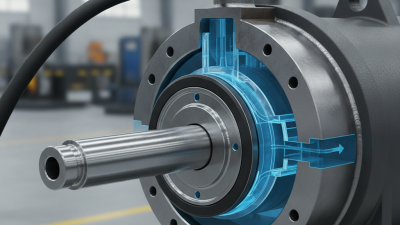
A dump bed rises when a pump sends pressurized oil through a control valve into the cylinder. In a common telescopic design, nested stages extend one after another, creating a long lift from a compact housing. The cylinder’s push depends on pressure and piston area. For example, at an assumed 2,500 psi, a four-inch bore produces about 31,400 pounds of ideal force. This is a calculation, not a field-test result; friction, oil temperature, load position, and bed angle reduce usable lifting force. ISO 4413:2010 outlines safety requirements for hydraulic systems, including pressure-related hazards.
Lowering is controlled, not simply a matter of releasing oil. The operator shifts the valve, allowing fluid to return to the reservoir while gravity brings the bed down. A flow-control or counterbalance valve can help prevent a sudden drop, especially when a load shifts. Some cylinders use hydraulic pressure to retract; many dump-bed systems rely mainly on gravity. That distinction matters. A bed that lowers unevenly may point to restricted flow, trapped air, or a misaligned pivot—not necessarily a failed cylinder. Check the cylinder rating and the complete system design, since a high pressure reading alone cannot confirm safe lifting capacity.
What Are the Main Types of Dump Bed Cylinders?
Dump bed cylinders are commonly described by their action and construction. A single-acting cylinder uses hydraulic pressure to raise the bed, then relies on gravity to retract. It has a straightforward hydraulic circuit and typically needs one pressure line. Simple, but not flawless. Return speed can vary with payload, hinge friction, and oil temperature.
Telescopic cylinders are widely used where a long lift is needed but installation space is limited. Their nested stages extend one after another, much like sections of a metal tube. Many are single-acting, though double-acting telescopic designs use hydraulic pressure to extend and retract. A conventional single-stage cylinder has one piston rod and may suit a bed needing less travel, provided the mounting space allows its longer retracted length.
The categories can overlap: “telescopic” describes the cylinder’s construction, while “single-acting” or “double-acting” describes its movement. Choosing between them depends on bed weight, required lift angle, available mounting space, and the hydraulic system’s pressure and flow. Check the cylinder’s rated capacity and stroke against the bed’s geometry, not just the truck’s rated payload. That detail is easy to miss. A poor match can produce uneven lifting or excessive strain on mounts.
How Do Telescopic, Single-Stage, and Double-Acting Cylinders Differ?
Dump-bed cylinder labels describe two different design questions: how many stages provide the stroke, and whether hydraulic pressure moves the rod in one or both directions. Telescopic cylinders nest several sleeves, giving a long stroke from a short closed length. That suits tight chassis-to-bed spaces. More stages also mean more seals and sliding surfaces. Dirt, side loading, and poor lubrication deserve attention. Single-stage cylinders use one rod and fewer moving interfaces. They are straightforward to inspect, but need more room when retracted. ISO 6020-1:2018 specifies a 16 MPa (160 bar) cylinder series; treat this as a technical reference, not a universal dump-bed pressure rating.
Double-acting describes operation, not stage count. Pressure drives both extension and retraction, so a double-acting cylinder can also be telescopic or single-stage. Powered retraction can help control bed lowering, though many dump designs rely heavily on gravity. That distinction matters. A buyer comparing “telescopic” with “double-acting” may be comparing unlike features. In practice, check the truck’s available mounting length, bed load, stroke, and hydraulic circuit before choosing. ISO 10100:2020 sets acceptance-test procedures for hydraulic cylinders, including checks relevant to performance and leakage. A standard does not replace testing under the actual duty cycle. I have seen compactness dominate selection discussions; it is useful, but not the whole story.
Top Types of Dump Bed Cylinders: Stage Count
Compare the number of stages in three example configurations. A single-stage cylinder has one stage; the telescopic example has three nested stages.
How they differ: “Single-stage” describes a cylinder with one extending stage. “Double-acting” describes hydraulic force in both extension and retraction; it is an action type, not a stage count. “Telescopic” describes nested stages that extend sequentially to provide a long stroke from a compact retracted length. Telescopic cylinders can be single-acting or double-acting, depending on their design.
What Factors Guide the Choice of a Dump Bed Cylinder?
Choosing a dump-bed cylinder starts with the bed’s geometry and the load it must lift, not simply the truck’s rated payload. Telescopic, single-acting cylinders suit long lifting strokes where installation space is limited; conventional cylinders may fit shorter, simpler layouts. A double-acting design can control movement in both directions, but adds hydraulic complexity. Match the cylinder’s force at the actual operating pressure to the heaviest expected load, including unevenly distributed material. Wet gravel shifting toward the tailgate can change the load substantially. Measure the required stroke and closed length on the real chassis. A tidy drawing can still miss a crossmember.
Mounting angle, pin strength, cycle frequency, temperature, and contamination also guide the choice. ISO 4413:2010 sets safety requirements for hydraulic systems, including pressure-related hazards; designers should account for relief settings and hose failure risks. Clean oil matters, too. ISO 4406:2021 defines particle-count codes; for example, code 18/16/13 represents ranges of 1,300–2,500 particles per millilitre at 4 μm(c), 320–640 at 6 μm(c), and 40–80 at 14 μm(c). This is a cleanliness classification, not a universal cylinder target. Dusty work sites may demand more effective filtration and seals suited to grit and water. Check the duty cycle and service access before selecting a compact unit. Small clearances can become a maintenance headache.

 +86-13349293098
 Contact WhatsApp
 Contact Email