How to Choose the Right Rodless Piston for Your Applications?
Choosing the right rodless piston for your applications is crucial. A rodless piston offers unique advantages over traditional designs. Its compact structure enables efficient use of space. This feature is especially important in environments with limited room.
When selecting a rodless piston, consider various factors such as load capacity and stroke length. Each application may require different specifications. Understanding your specific needs fosters better decision-making. For instance, a small manufacturing unit may prioritize speed and precision. Alternatively, a heavy-duty setup might demand durability and strength.
Many users underestimate the importance of compatibility. The rodless piston should integrate seamlessly with existing systems. Researching available options ensures the best fit for your equipment. Mistakes can be costly, leading to performance issues or failures. Therefore, investing time in understanding your choices is essential. Ultimately, the right rodless piston enhances productivity and efficiency in your operations.

Understanding Rodless Pistons and Their Applications
Rodless pistons are essential in various industrial applications, from packaging to material handling. Unlike traditional pistons, they operate without rods, making them more compact and versatile. Their design minimizes friction, leading to smoother movement and improved efficiency. A recent report from a leading automation industry analyst indicates that rodless pistons can reduce maintenance costs by up to 30% due to lower wear and tear.
Choosing the right rodless piston involves understanding their unique features. They come in various shapes, such as belt-driven and magnet-driven models. Each type is designed for specific tasks. For instance, belt-driven models excel in high-speed applications, while magnet-driven options provide precise control for delicate tasks. It's vital to match the piston type with the application's requirements for optimal performance.
Tips: Always consider load capacity and stroke length when selecting. These factors directly impact efficiency. Conduct a thorough analysis of the application environment as well. Dust, humidity, and temperature changes can affect performance. Having a robust understanding of these elements can prevent potential issues. Be mindful, as overestimating piston capabilities can lead to equipment failure. Regular evaluations of your system's needs will ensure your rodless piston operates effectively.
Performance Comparison of Different Rodless Piston Types
Key Factors to Consider When Selecting a Rodless Piston
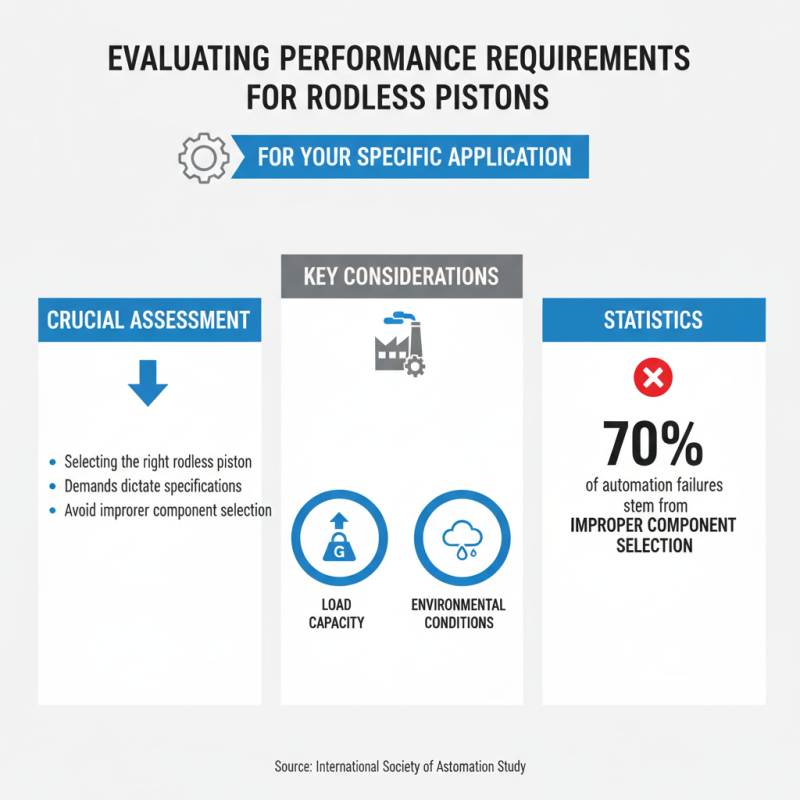
When selecting a rodless piston for various applications, it is critical to evaluate key factors. The operating environment plays a significant role. Working temperature, humidity, and potential exposure to chemicals can impact performance. According to industry reports, over 30% of rodless piston failures are linked to unsuitable environmental conditions. Ensuring a compatible piston with the operational environment prevents future complications.
Load capacity is another essential consideration. The rodless piston must meet the weight and force requirements of the specific application. A recent study indicated that nearly 25% of process inefficiencies stem from using inadequate load-bearing components. It is crucial to calculate the required thrust accurately. This proactive approach avoids potential malfunctions and enhances overall system efficiency.
Precision and stroke length must also be evaluated carefully. The right dimensions significantly affect application performance. A mismatch in stroke length can lead to reduced accuracy in movement, impacting productivity. Nearly 15% of operational delays come from incompatible piston specifications. Operators should review their design and tolerance requirements thoroughly to ensure proper fit and functionality.
Comparing Different Rodless Piston Designs and Mechanisms
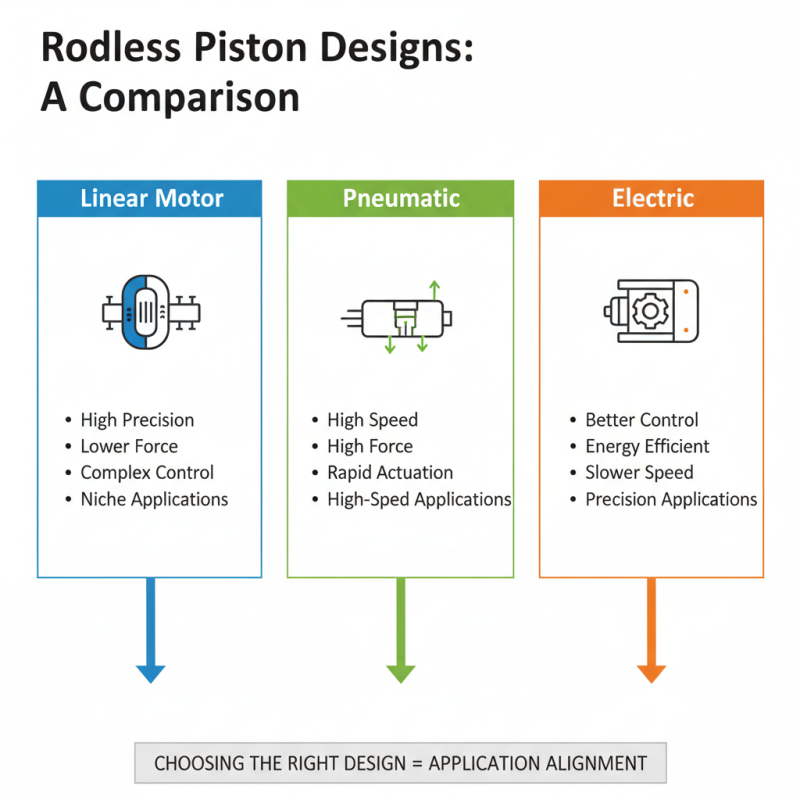
When considering rodless piston designs, it's important to understand their different mechanisms. Each design has unique advantages that can align with specific applications. For instance, linear motors provide greater precision but may lack the force of pneumatic systems. A recent industry report highlights that pneumatic rodless pistons are often preferred for high-speed applications due to their rapid actuation. In contrast, electric options, while slower, offer better control and energy efficiency.
Tips: Assess your application needs before choosing a mechanism. Evaluate factors like speed, precision, and load capacity. It's vital to align the rodless piston type with operational requirements.
Comparing these designs reveals trade-offs. Some features may enhance performance but could increase maintenance complexity. Innovative designs like twin-piston systems deliver amplification of force and improved efficiency. However, they may complicate installation and require precise alignment. According to industry analyses, over 30% of rodless piston failures stem from misalignment during setup.
Tips: Regular maintenance and precise installation can mitigate failures. Ensure all components are aligned properly to enhance durability and performance.
Maintenance and Operational Considerations for Rodless Pistons
When it comes to rodless pistons, maintenance and operational considerations are crucial for optimal performance. According to a recent industry report, about 30% of system failures can be traced back to improper maintenance practices. Regular inspections can significantly reduce downtime and enhance lifespan. A frequent point of neglect involves lubrication. Many users overlook the importance of maintaining proper lubricant levels. Insufficient lubrication can lead to increased friction, wear, and ultimately failure.
Operational efficiencies also play a pivotal role. A study indicated that systems running at the correct air pressure can achieve up to 20% greater efficiency. Too often, operators choose settings that are either too high or too low, impacting performance. Misalignment of the rodless piston can also cause issues. Regular checks should be performed to ensure that the piston is correctly aligned within the system, as misalignment can increase energy consumption and lead to premature wear.
Consider the environment where the rodless piston operates. Dust, moisture, and temperature fluctuations can affect performance. Industries report that up to 25% of rodless piston failures are attributed to environmental factors. Operators should evaluate these conditions frequently and implement protective measures. It’s imperative to acknowledge that while these factors seem manageable, they often lead to oversight and serious operational challenges.

 +86-13349293098
 Contact WhatsApp
 Contact Email