How to Choose the Right Rodless Piston for Your Needs?
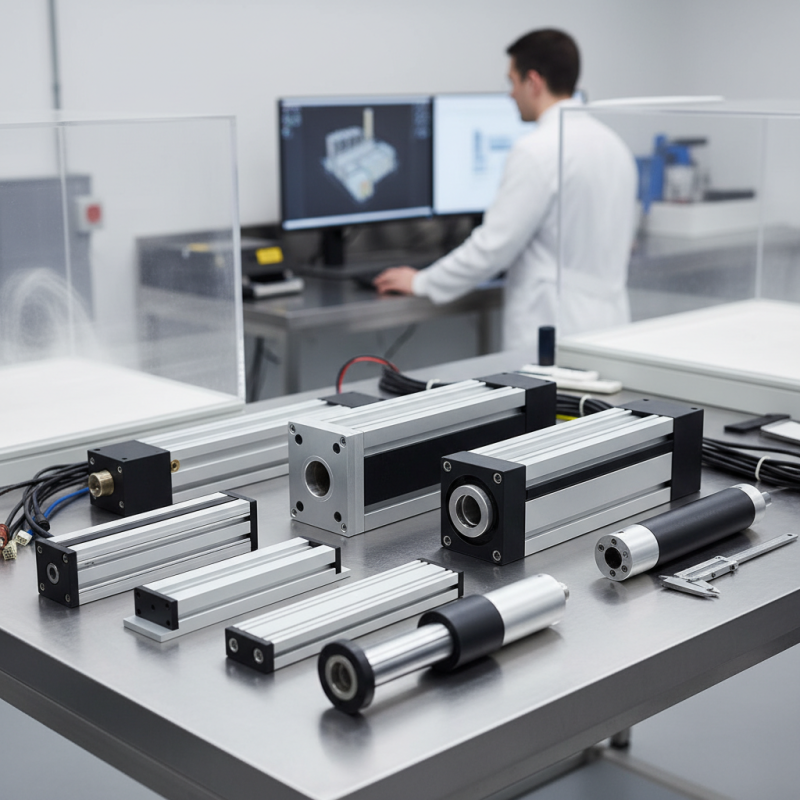
Choosing the right rodless piston can significantly improve your operations. It is crucial to match your specific needs with the right components. Rodless pistons offer a unique advantage by minimizing space while maximizing efficiency.
When selecting a rodless piston, consider the load capacity. Each application requires a different level of power. Additionally, stroke length should match your operational needs. Do not overlook the required speed. A mismatch can lead to operational inefficiencies.
Reflect on the environment too. Is it clean or filled with dust? This factor could affect the piston’s performance. Understand that not all rodless pistons are created equal. The wrong choice may result in frustration and unnecessary costs. Take your time and analyze each criteria carefully.
Understanding the Basics of Rodless Piston Technology and Applications
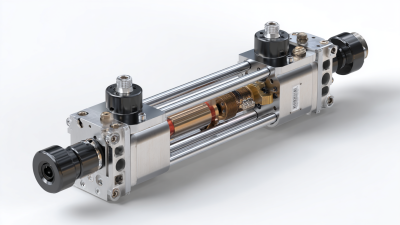
Rodless piston technology is transforming automation and industrial applications. At its core, this technology eliminates the need for a traditional rod, allowing for a more compact and efficient design. A report by the International Federation of Robotics states that the global robotics market is projected to reach $150 billion by 2025. This growth is driven by innovations like rodless pistons, which offer significant space-saving advantages.
In industries such as packaging and material handling, rodless pistons are crucial. They provide linear motion without the bulk of rods. According to industry analysis, these systems can improve speed and reduce cycle times by up to 25%. However, selecting the appropriate rodless piston can be tricky. Consider the load capacity and speed. The wrong choice can lead to inefficiency and increased wear, which is costly in the long run.
While many applications benefit from rodless pistons, there are limitations. They may not work well in extreme environments without proper safeguards. Awareness of these factors is vital for ensuring optimal performance and longevity. Assessing specific needs can guide better decision-making in rodless piston selection.
How to Choose the Right Rodless Piston for Your Needs?
| Feature |
Standard Ranges |
Application Areas |
| Stroke Length |
50 mm to 3000 mm |
Material handling, packaging |
| Operating Pressure |
1 to 8 bar |
Automation, assembly lines |
| Body Material |
Aluminum, Stainless Steel |
Food processing, cleanrooms |
| Speed |
0.1 m/s to 1.5 m/s |
High-speed assembly, packaging |
| Options |
Magnetic, Non-Magnetic |
Robotics, precision applications |
Key Factors to Consider When Selecting a Rodless Piston
When selecting a rodless piston, several key factors should be taken into account. The operating environment plays a crucial role. Conditions like temperature and humidity can impact performance. For instance, in high-temperature scenarios, the material selection becomes vital. A report by the International Fluid Power Society emphasizes that over 70% of rodless piston failures come from environmental stressors.
Another important consideration is the load capacity. Rodless pistons are designed for various weight loads. Many applications, such as assembly lines, require precise weight handling. The maximum load specification should correspond to the specific application needs. Technical specifications can vary. According to research, 45% of engineering teams underestimate load factors, leading to operational inefficiencies.
Installation space is also critical. Rodless pistons excel in environments where traditional pistons may not fit. The compact design can enhance productivity. Data indicates that using rodless options can reduce overall footprint by 40%. However, potential users must evaluate existing layout compatibility. Not all rodless designs seamlessly integrate with current machinery. Some adjustments may be needed, creating extra work in the long run.
Comparative Insights: Pneumatic vs. Electric Rodless Piston Systems
When selecting a rodless piston system, understanding the differences between pneumatic and electric options is crucial. Pneumatic systems use compressed air. This allows for high-speed operations. They are often lighter and simpler. However, they require an air supply, which can be limiting. Maintenance is also required to avoid leaks and ensure efficiency.
On the other hand, electric rodless pistons operate using electric motors. They provide precise control over speed and position. This feature is beneficial for applications needing exact measurements. However, they can be heavier and more complex than pneumatic systems. Power supply instability may pose challenges. It is important to assess the environment where these systems will be used.
Each option has advantages and drawbacks. Pneumatic systems may lead to inefficiencies if not regularly maintained. Electric systems could overheat without proper cooling. Evaluating your specific needs is essential. Take time to reflect on factors such as load requirements and space constraints. This decision can shape performance and productivity in the long run.
Performance Metrics: Speed, Stroke Length, and Payload Capacity Explained
Choosing the right rodless piston involves understanding key performance metrics. Speed is a primary factor. It affects how quickly your system responds. Fast strokes can enhance productivity. However, too much speed may compromise precision. It's a balancing act that requires careful evaluation.
Stroke length is another important aspect. It determines the range of motion for your application. A longer stroke can reach farther, but it may need more space. In contrast, a shorter stroke is compact but limits reach. Think about your specific needs.
Payload capacity cannot be overlooked. It indicates how much weight your system can handle. This varies widely across models. Often, manufacturers provide guidelines, but real-world testing is essential. Assess how your chosen piston performs under load. Not every system meets expectations, so be prepared for adjustments. Consider trial and error as part of your decision-making process.
Performance Metrics of Rodless Pistons
This chart compares different performance metrics such as Speed (mm/s), Stroke Length (mm), and Payload Capacity (kg) for various rodless pistons.
Cost Analysis: Initial Investment vs. Long-Term Benefits of Rodless Pistons
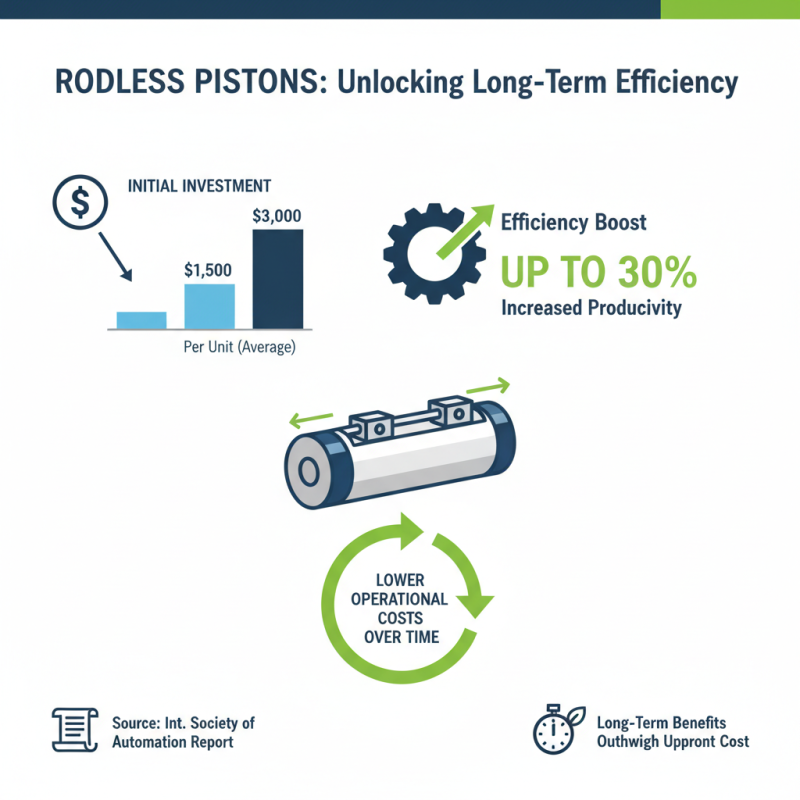
When considering rodless pistons, initial investment costs can be significant. On average, businesses might spend between $1,500 and $3,000 per unit. However, this upfront cost often overlooks the machine's long-term benefits. A report by the International Society of Automation shows that rodless pistons can improve efficiency by up to 30%. This increased productivity translates to lower operational costs over time.
Maintenance is another aspect to evaluate. Reports indicate that rodless pistons typically require less frequent maintenance. This can lead to a 20% reduction in maintenance costs. While these pistons may be initially more expensive, their durability and reduced need for repairs can lead to substantial savings. Investing in high-quality tubing can further enhance their lifespan.
Moreover, there are considerations beyond mere costs. Not all rodless pistons perform equally under different conditions. It’s essential to assess their compatibility with existing systems. Some models may underperform, leading to losses that offset initial savings. Weighing these factors is crucial for informed decision-making.

 +86-13349293098
 Contact WhatsApp
 Contact Email