What Are Agricultural Cylinders and How Do They Work?
Agricultural Cylinders are the quiet actuators behind many modern farm operations. They raise loaders, tilt seeders, fold planter wings, adjust mower decks, and control harvesting equipment. Inside each cylinder, pressurized hydraulic oil pushes a piston through a sealed tube. That linear force becomes practical movement at the attachment point.
The mechanism looks simple. It is not always forgiving. A scratched rod, contaminated oil, or weak seal can reduce lifting capacity and create dangerous drift. Field experience shows that cylinder performance depends on correct sizing, clean fluid, mounting alignment, and regular inspection. Dr. John R. Fulton, an agricultural machinery specialist at Ohio State University, offers a useful principle: “Machine performance depends on controlled power, not horsepower alone.” That idea fits hydraulic design closely.
Industry reports support this wider context. The OECD-FAO Agricultural Outlook 2024–2033 connects future farm output growth with productivity improvements, mechanization, and efficient resource use. The Food and Agriculture Organization’s agricultural machinery data also shows how equipment access varies sharply between regions. More machines do not automatically mean better farming. Maintenance matters.
Market studies from Grand View Research and MarketsandMarkets describe continued growth in agricultural machinery and hydraulic equipment demand. However, their forecasts use different definitions and methods. Comparisons should be careful. This article explains how Agricultural Cylinders work, where force is created, and why small design choices affect reliability. It also examines common failures, practical maintenance checks, and the limits of treating every cylinder as interchangeable.
What Are Agricultural Cylinders?
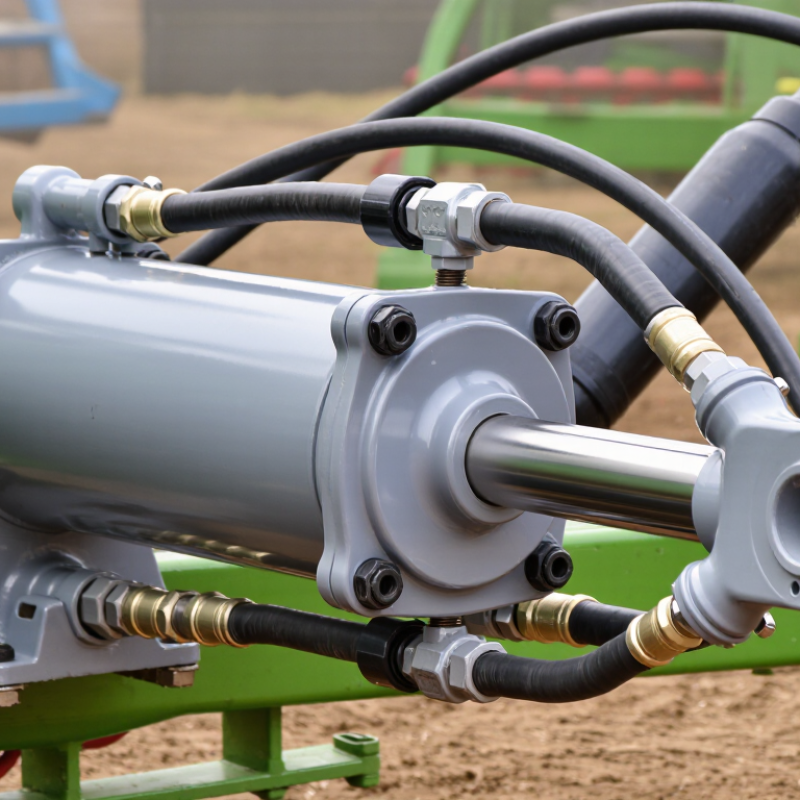
Agricultural cylinders are hydraulic actuators that move farm equipment with controlled force. They appear on tractors, harvesters, loaders, sprayers, and planting machines. A cylinder contains a barrel, piston, rod, seals, and hydraulic fluid. When pressurized fluid enters one side, it pushes the piston. The rod then extends or retracts. Force equals pressure multiplied by piston area. Larger pistons deliver greater force, while longer barrels create greater movement.
Their value becomes clear during practical work. A loader cylinder may raise a heavy bucket, while a planter cylinder adjusts row units across uneven soil. According to the USDA 2022 Census of Agriculture, the United States had about 1.9 million farms. That scale shows why dependable hydraulic motion matters. The OECD-FAO Agricultural Outlook 2024–2033 projects global agricultural and fish production to grow about 1.1% annually. More output can increase demand for efficient, maintainable machinery. Yet, a cylinder is not automatically efficient. Contaminated oil, bent rods, damaged seals, and incorrect pressure settings can reduce performance quickly. The simple diagram often hides difficult field conditions.
Tips: Inspect rod surfaces before each season. Keep couplers clean. Check oil for water or metal particles. Match cylinder force with the machine’s rated load. Replacement seals may solve a leak, but not a misaligned mounting point. This is where maintenance decisions need careful review.
What Are the Main Types of Agricultural Cylinders?
Agricultural cylinders are hydraulic actuators used to create controlled linear movement. They convert pressurized fluid into pushing or pulling force. On a tractor, that force can lift an implement, fold a planter, adjust a blade, or tilt a trailer. The USDA National Agricultural Statistics Service reported about 1.9 million farms in its 2022 Census of Agriculture. Across that scale, dependable cylinder movement affects field timing, operator effort, and repair costs. Small details matter.
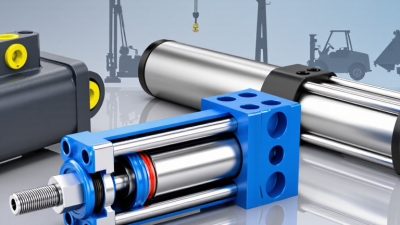
Single-acting cylinders use hydraulic pressure in one direction. Gravity, a spring, or an external load returns the rod. They suit basic lifting and unloading tasks. Double-acting cylinders use pressure on both sides of the piston. This provides controlled extension and retraction for loaders, steering systems, tillage frames, and harvesting adjustments. Telescopic cylinders contain nested stages. They provide long strokes from a short retracted length, which is useful on dump trailers and compact equipment. Construction also matters. Welded cylinders are compact and robust, while tie-rod designs can simplify servicing.
Selection should follow the real duty cycle, not only a catalog photograph. Compare bore size, rod diameter, stroke, mounting points, pressure rating, seal compatibility, and side-load exposure. FAO AQUASTAT reports that agriculture accounts for roughly 70% of global freshwater withdrawals, supporting the importance of durable hydraulic equipment in irrigation and farm operations. Yet the classification is never perfectly clean. A welded cylinder can also be double-acting or telescopic. This overlap can confuse buyers. In practice, contamination, cold starts, poor hose routing, and loose pins may reduce service life before theoretical limits are reached. Be skeptical of simple comparisons.
How Do Agricultural Cylinders Work?
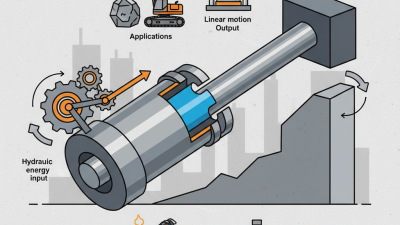
Agricultural cylinders are hydraulic actuators that convert fluid pressure into controlled movement. They lift loaders, tilt implements, open gates, and adjust cutting height. Their operation is simple, but the forces are substantial. A pump sends pressurized oil through a directional valve. The valve routes oil to one side of a piston. Pressure then creates force, calculated as F = P × A. Oil entering the cap end extends the rod. Oil entering the rod end retracts it. Flow rate controls movement speed, while pressure controls available force.
Cylinder performance depends on seals, bore size, rod diameter, oil cleanliness, and load alignment. A larger bore produces more force, but it also requires more oil. A larger rod improves resistance to bending, though it reduces return-side area. Field technicians often inspect wet rod surfaces, uneven movement, and sudden drift. These signs may indicate seal wear, trapped air, or a leaking holding valve. The U.S. Department of Energy identifies leakage and throttling as major sources of hydraulic energy loss. FAO AQUASTAT reports that agriculture uses roughly 70% of global freshwater withdrawals, reminding engineers that efficient machinery matters, even when the fluid is not water.
Tips: Keep hydraulic oil filtered and check hoses before heavy work. Measure drift with the implement raised safely. Do not trust appearance alone; a clean cylinder can still have internal bypass. ISO 4413 recommends controlling stored hydraulic energy, but field routines sometimes overlook this step. That mistake deserves correction.
What Are the Key Parts of an Agricultural Cylinder?
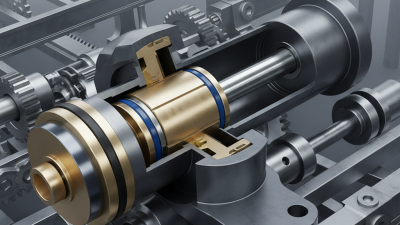
Agricultural cylinders convert hydraulic pressure into controlled movement. They raise implements, adjust blades, steer equipment, and open heavy gates. The cylinder barrel holds pressurized fluid. Inside it, the piston divides the chamber into two working areas. A chrome-plated rod transfers piston force to the attachment. Double-acting cylinders use fluid on both sides, allowing powered extension and retraction.
The key parts are closely connected. Piston seals reduce internal leakage, while rod seals keep dirt and moisture outside. A wiper protects the rod during dusty fieldwork. The gland supports the rod and carries several sealing elements. Ports direct hydraulic fluid into each chamber. Clevises, trunnions, or cross-tube mounts connect the cylinder to moving machinery. Even the smallest seal matters. A damaged wiper can invite grit, causing scratches and faster leakage.
Field conditions expose weak points quickly. FAO AQUASTAT reports that agriculture accounts for roughly 70% of global freshwater withdrawals. This increases pressure for efficient equipment and careful maintenance. Agricultural cylinders do not create hydraulic energy; they depend on a pump, valve, fluid, and sound hoses. A clean-looking cylinder may still have internal bypassing. That is easy to miss.
Tips: Check rod scoring, wet seals, loose mounts, and uneven movement before heavy use. Measure drift with the attachment safely supported. Use the manufacturer’s specified fluid cleanliness and seal materials. I would not treat a minor leak as harmless; it often becomes a costly failure.
What Are Agricultural Cylinders and How Do They Work?
Agricultural hydraulic cylinders convert pressurized hydraulic fluid into linear motion. The piston, rod, barrel, seals, gland, and mounting points work together to lift, tilt, steer, or adjust farm equipment.
Chart explanation: The chart shows the theoretical extension force produced by common hydraulic cylinder bore sizes at 200 bar system pressure. Force is calculated using F = P × A, where P is hydraulic pressure and A is piston area. Actual force may be lower because of friction, pressure losses, and seal resistance.
Key Parts of an Agricultural Cylinder
- Barrel: Contains the hydraulic fluid and guides the piston.
- Piston: Separates the two fluid chambers and converts pressure into force.
- Piston rod: Transfers the piston force to the attached implement.
- Seals: Prevent internal and external hydraulic-fluid leakage.
- Gland and rod guide: Supports the rod and protects the cylinder interior from contamination.
- Mounting points: Connect the cylinder to the tractor or agricultural implement.

 +86-13349293098
 Contact WhatsApp
 Contact Email